
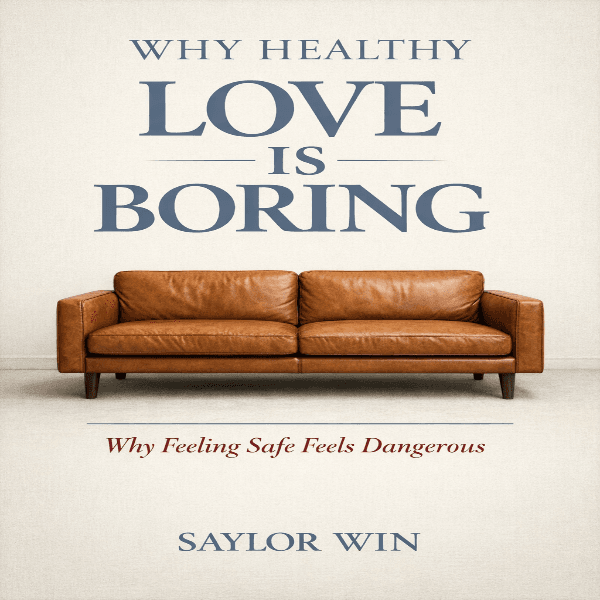
Why Healthy Love Is Boring
Calm isn’t boring—it’s unfamiliar to a body trained on intensity.
For: safety intolerance · attachment loops · chaos-as-chemistry
Nervous-system tools · literary psychology
Time is where memory becomes visible. I write from the minute your nervous system reaches for the old solution.
Practical protocols for overthinking, attachment loops, and screen-trained stress—built for real moments.
No sermons—just levers that work in real moments.
Start where your nervous system is loudest: overthinking, heartbreak withdrawal, screen-trained stress, parenting escalation, or safety intolerance.
What’s loud today?
“Your mind isn’t thinking. It’s bracing.”
For: replay rumination · future rehearsal · numb scrolling
"If your heart isn't sprinting, nothing real is happening."
— from the work-in-progress archive
What keeps repeating—no matter what you promise?
Worry spirals, replay, rehearsal mode, analysis paralysis.
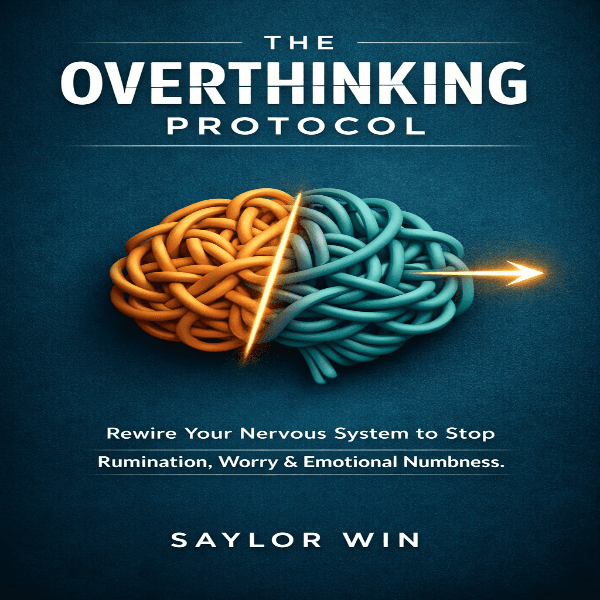
Start with “The Overthinking Protocol” →Meltdowns, power struggles, guilt cycles, constant escalation.
Start with “Calm Parent, Focused Child” →Safety feels boring. Intensity feels like home. You keep re-entering the same story.
You bought the self-help book but couldn't finish it. Your brain is trained for short loops, constant input, and endless tabs.
Start with “The Safety Paradox” →Choose by symptom, not identity. Start where your nervous system is loudest—safety intolerance, heartbreak withdrawal, scroll-trained activation, parenting escalation, or rumination loops.
Not sure where to start? Pick what’s true today:
Calm isn’t boring—it’s unfamiliar to a body trained on intensity.

Stop checking. Stop dosing. Break the bond without “closure.”
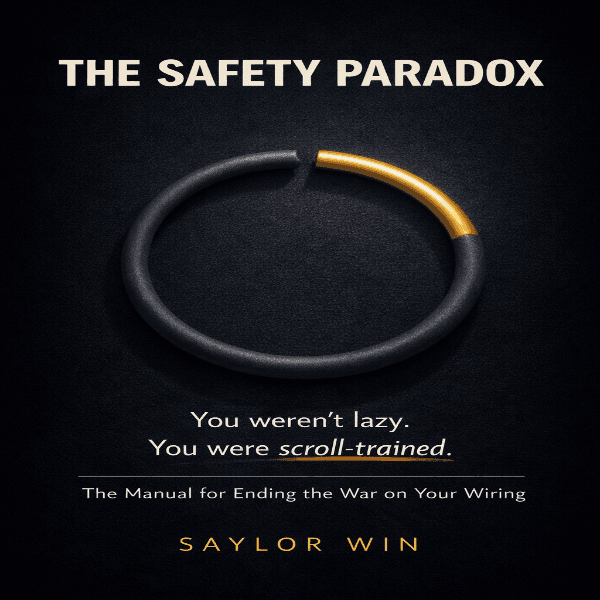
A manual for the scroll-trained nervous system—tools you can use when you can’t focus.
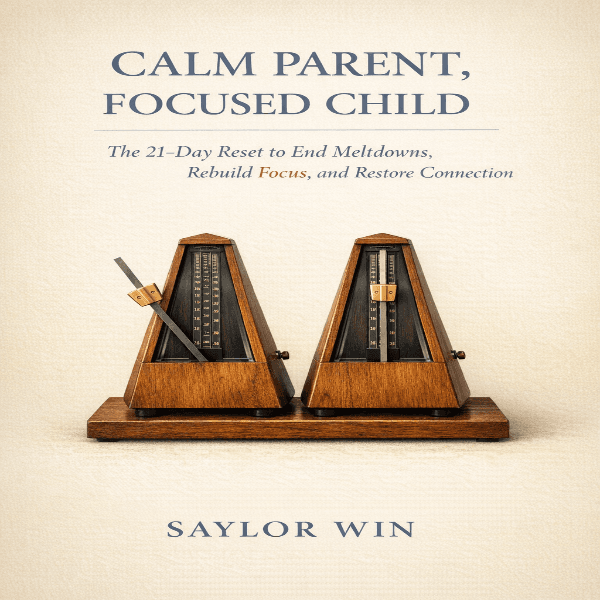
A 21-day co-regulation reset for homes stuck in daily escalation.
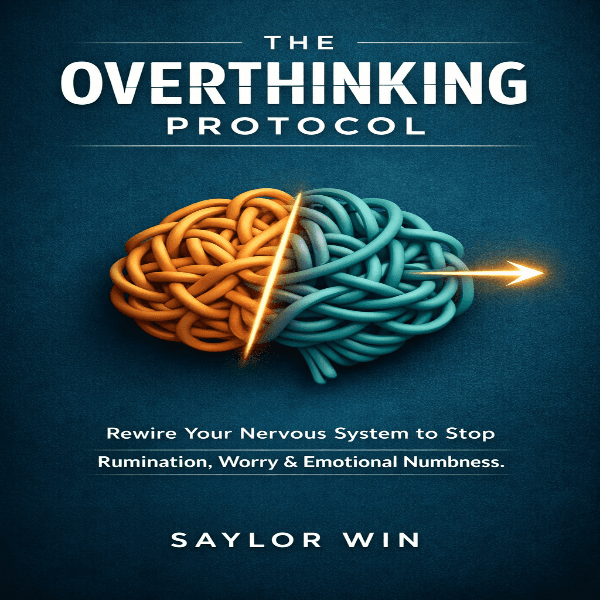
Interrupt the loop by shifting state—then doing one real thing.
I’m Saylor Win—a nervous-system researcher and educator with master’s-level training in communication and occupational psychology. I translate nervous-system science into usable tools for modern life, especially for people whose attention, stress, and attachment systems have been reshaped by constant digital input.
Because time is where memory becomes visible. I write from the minute your nervous system reaches for the old solution—before your mind can make it sound reasonable.
I don’t write “tips.” I write where patterns actually live: on the couch at 19:26 on a Tuesday, hand already reaching for the phone; in the supermarket aisle where grief ambushes you between ordinary choices; in the half-second after “I’m fine,” when your body has already answered and your mouth is still performing.
Most self-help tries to talk you out of biology. I work with it. The method is deliberately simple (and repetitive on purpose): name the loop, locate it in the body, change the input, repeat—until the nervous system updates. Not performative healing. Not aesthetics. Actual pattern change.
That’s why my books move the way they do: memoir-level specificity (so you recognize yourself), protocol-level leverage (so you can interrupt the loop), and workbook-level integration (so the change survives Tuesday, not just Sunday).
Across Why Healthy Love Is Boring, ERASE HIM, The Safety Paradox, Calm Parent, Focused Child, and The Overthinking Protocol, the promise stays consistent: fewer explanations, more leverage—relief you can feel in your body.
You don’t have to agree with every idea or scene.
You don’t have to like every decision I make (I didn’t either).
Start where your body recognizes itself.

For permissions, media inquiries, or rights:contact@saylorwin.com